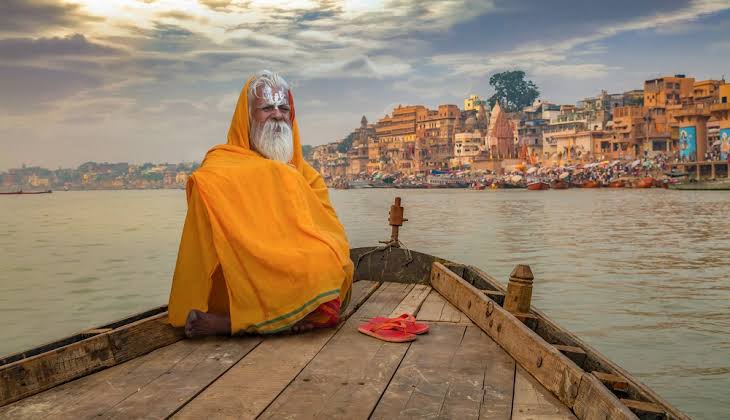
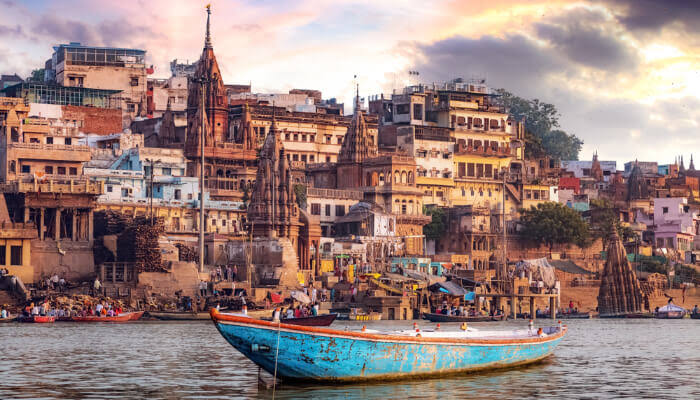
Ghats in Varanasi are riverfront steps leading to the banks of the River Ganges. The city has 88 ghats. Most of the ghats are bathing and puja ceremony ghats, while two ghats are used exclusively as cremation sites.
Most Varanasi ghats were rebuilt after 1700 AD, when the city was part of Maratha Empire. The patrons of current ghats are Marathas, Shindes (Scindias), Holkars, Bhonsles, and Peshwes (Peshwas). Many ghats are associated with legends or mythologies while many ghats are privately owned. Morning boat ride on the Ganges across the ghats is a popular visitors attraction.
POPULAR GHATS
According to the puranic sources, there are five key ghats on the riverfront, important because of their association with a defining feature of the holy city of Kashi:
ASSI GHAT
DASHASHWAMEDH GHAT MANIKARNIKA GHAT
PANCHGANGA GHAT
RAJENDRA PRASAD GHAT
ADI KESHAV GHAT.
CREMATION ON GHATS
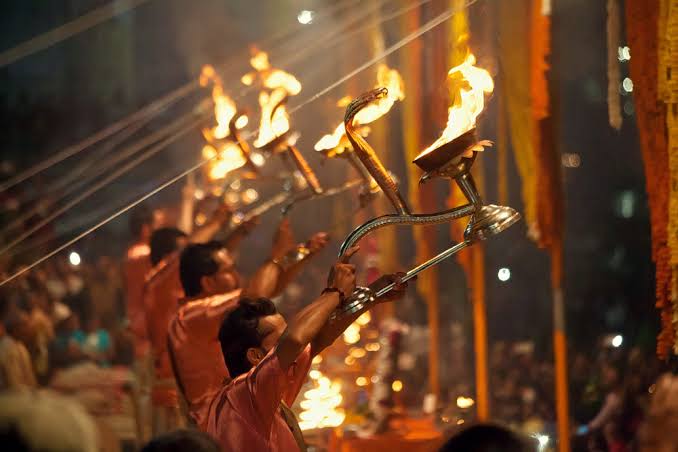
Cremations in progress at Manikarnika Ghat, Varanasi. In Hindu traditions, cremation is one of the rites of passage and the Ghats of Varanasi are considered one of the auspicious locations for this ritual. At the time of the cremation or “last rites”, a “Puja” (prayer) is performed. Hymns and mantras are recited during cremation to mark the ritual.
The Manikarnika and Harishchandra Ghats are dedicated to the cremation ritual. Annually, less than 2 in 1000 people who die in India, or 25,000 to 30,000 bodies are cremated on various Varanasi Ghats; about an average of 80 per day. This practise has become controversial for the pollution it causes to the river. In the 1980s, the Government of India funded a Clean Ganges initiative, to address cremation and other sources of pollution along the Ghats of Varanasi. In many cases, the cremation is done elsewhere and only the ashes are dispersed into the river near these Ghats.

 Namaste Varanasi